 PureShapeFocus
Adipose Tissue Distribution Science
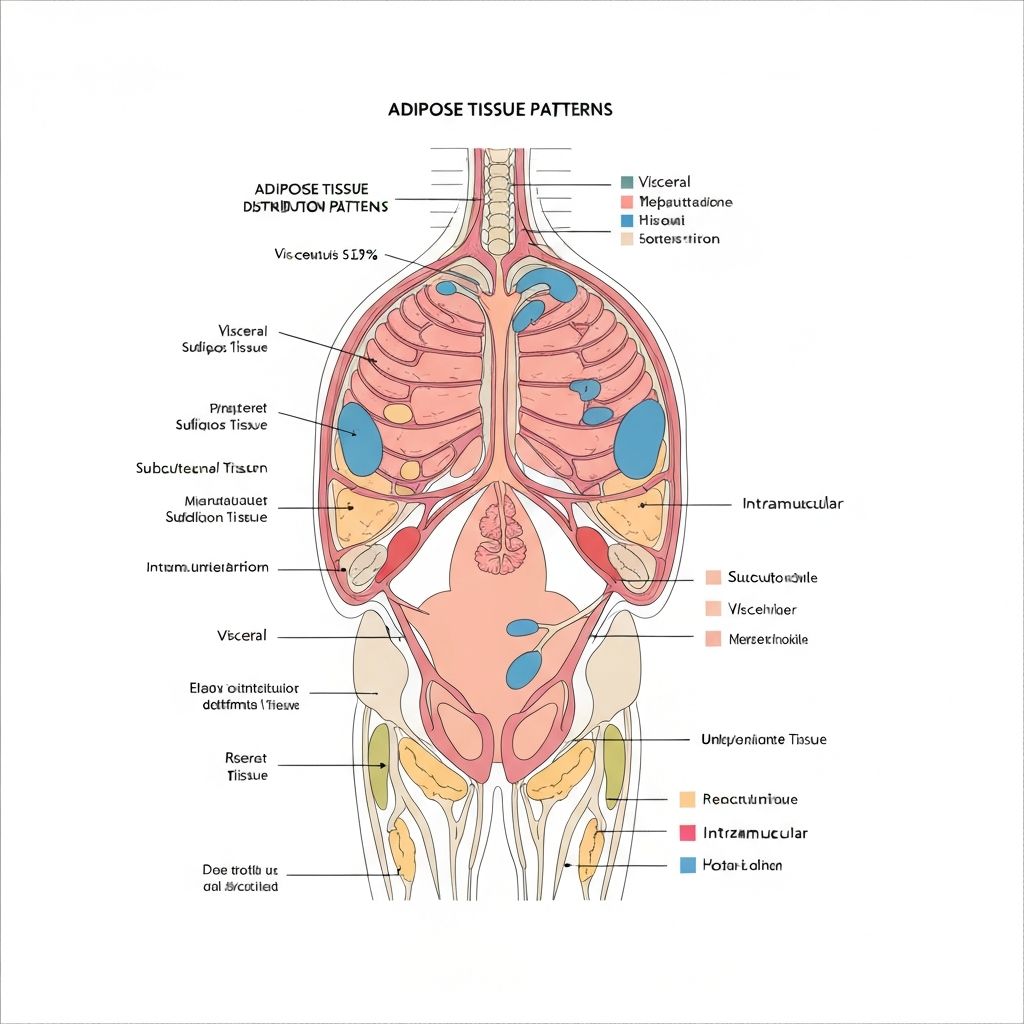
Understanding Fat Tissue Distribution
While total body fat is important for understanding body composition, the location where fat is stored—known as adipose tissue distribution—is equally significant from a physiological and metabolic perspective. Different individuals and populations show characteristic patterns in where they accumulate adipose tissue.
Types of Adipose Tissue Distribution
Adipose tissue distribution patterns can be broadly categorized as central, peripheral, or mixed. Central distribution involves greater fat accumulation in the abdominal and trunk regions. Peripheral distribution involves greater fat accumulation in the hips, thighs, and limbs. Most individuals show mixed patterns with varying proportions of central and peripheral fat.
Central vs Peripheral Patterns
Central adipose accumulation, sometimes called "apple-shaped" distribution, appears to be influenced by different metabolic factors than peripheral accumulation. Hormonal environment, particularly cortisol and androgens, influences central distribution. Metabolic factors and nutrient processing efficiency also contribute to distribution patterns.
Peripheral adipose accumulation, sometimes called "pear-shaped" distribution, shows different physiological characteristics. This pattern appears more related to estrogen influence and different metabolic processing in peripheral tissues. Distribution patterns reflect complex hormonal and metabolic interactions rather than simple energy storage.
Sex Differences in Distribution
On average, biological females tend to show greater peripheral adipose distribution while biological males tend to show greater central distribution. Sex hormones—estrogen and testosterone—directly influence where adipose tissue is preferentially stored. These average differences reflect hormonal effects on tissue distribution, not differences in overall composition tendency.
However, individual variation within each sex is enormous. Many women have central distribution patterns, and many men have peripheral patterns. Hormonal changes across the lifespan can alter distribution patterns independent of total fat amount.
Physiological Factors Influencing Distribution
Hormonal Influences
Multiple hormones influence adipose distribution patterns. Estrogen promotes peripheral fat storage, while androgens and cortisol promote central storage. These hormonal effects help explain why distribution patterns change with age, reproductive status, and stress levels.
Thyroid hormones influence metabolic rate and may affect distribution through effects on overall energy balance and fat mobilization patterns. Insulin affects both fat storage and the nutrient partitioning that influences where energy is stored.
Genetic Predisposition
Distribution patterns show substantial genetic influence. Genetic variation affects which depot tissues preferentially store fat. Some individuals genetically tend toward central storage regardless of hormonal state, while others tend toward peripheral storage.
Population genetic differences create characteristic distribution patterns in different ethnic groups, reflecting adaptation to ancestral environments and dietary conditions. These genetic patterns interact with modern environmental conditions to create distribution patterns observed in contemporary populations.
Nutritional Influences
The composition of dietary intake influences adipose distribution through effects on metabolic signaling and hormone production. High refined carbohydrate diets may promote central fat distribution through insulin signaling effects. Different macronutrient ratios influence hormonal profiles that affect distribution.
Micronutrient status affects metabolic processes that determine fat partitioning. For example, adequate vitamin D status influences hormonal balance and may affect distribution patterns. Antioxidant status affects inflammation markers that influence metabolic function and fat distribution.
Activity Patterns
Physical activity influences adipose distribution through multiple mechanisms. Resistance training appears to preferentially reduce central adipose accumulation independent of total fat loss. Cardiovascular activity affects overall metabolic function and energy balance.
Different activity types create different metabolic signals that may influence distribution. Occupational activity patterns historically determined different distribution profiles in different populations—sedentary occupations associated with different distribution patterns than occupations requiring significant physical labor.
Stress and Cortisol
Chronic stress elevates cortisol, which promotes central adipose accumulation through metabolic signaling effects. Individuals under chronic stress often show preferential central fat storage independent of total caloric intake. Stress reduction interventions may influence distribution patterns by reducing cortisol signaling.
Population Distribution Patterns
Different populations show characteristic average adipose distribution patterns reflecting combinations of genetic predisposition and environmental factors.
Geographic and Ethnic Variation
Populations from different geographic origins show different average distribution patterns reflecting adaptation to ancestral environments. Populations adapted to cold climates historically showed central fat storage patterns, efficient for heat retention. Populations adapted to warm climates showed different patterns.
Modern populations show rapid changes in distribution patterns following environmental changes. Immigrant populations adopting new dietary patterns often show distribution pattern shifts within one generation, demonstrating the rapid responsiveness of distribution patterns to environmental change.
Dietary Pattern Influences
Traditional dietary patterns create characteristic distribution patterns in populations. Populations with high refined carbohydrate consumption patterns show tendencies toward central distribution. Populations maintaining traditional whole-food diets show different distribution patterns even with similar total fat percentages.
The nutritional composition of traditional diets—macronutrient ratios, micronutrient density, and processing levels—appears to influence distribution patterns at the population level. Changes in dietary patterns with modernization create rapid distribution pattern changes.
Why Distribution Matters
Understanding adipose distribution is important because distribution affects metabolic function and tissue interactions independent of total fat amount.
Metabolic Implications
Different adipose depot locations show different metabolic characteristics. Central adipose tissue, particularly visceral adipose, shows more active metabolic signaling than subcutaneous adipose tissue. This means central fat may create different metabolic signals than peripheral fat despite equal quantities.
Individual Variation
Two individuals with identical total body fat percentages but different distribution patterns may have different metabolic characteristics. This explains why looking at composition requires considering distribution, not just total percentages. Individual distribution patterns reflect genetic predisposition interacting with hormonal state and nutritional history.
Population Health Patterns
Population-level research reveals correlations between distribution patterns and health outcomes independent of total body fat. However, these correlations reflect complex interactions between distribution, total fat, metabolic function, and lifestyle factors—not causation flowing simply from distribution to health outcomes.
Distribution Pattern Changes
Adipose distribution patterns change across the lifespan and in response to environmental changes. Age-related shifts in hormone production often create distribution pattern changes. Reproductive status changes influence distribution patterns through hormonal effects.
Nutritional and activity interventions can influence distribution patterns independent of total weight change. This suggests that understanding metabolic signaling through nutrition and activity may allow targeted approaches to influencing where fat is preferentially stored or mobilized.
Normal Variation
The diversity of adipose distribution patterns across populations is normal and reflects normal physiological variation created by genetic and environmental factors. Different distribution patterns are not pathological—they reflect different combinations of genetic predisposition and environmental influences. Understanding this variation provides context for appreciating the diversity of human body shapes and compositions.
Explore More
Read our other articles to expand your knowledge of body composition science.
Return to Blog