 PureShapeFocus
What Determines Body Composition Variation?
Understanding the Factors
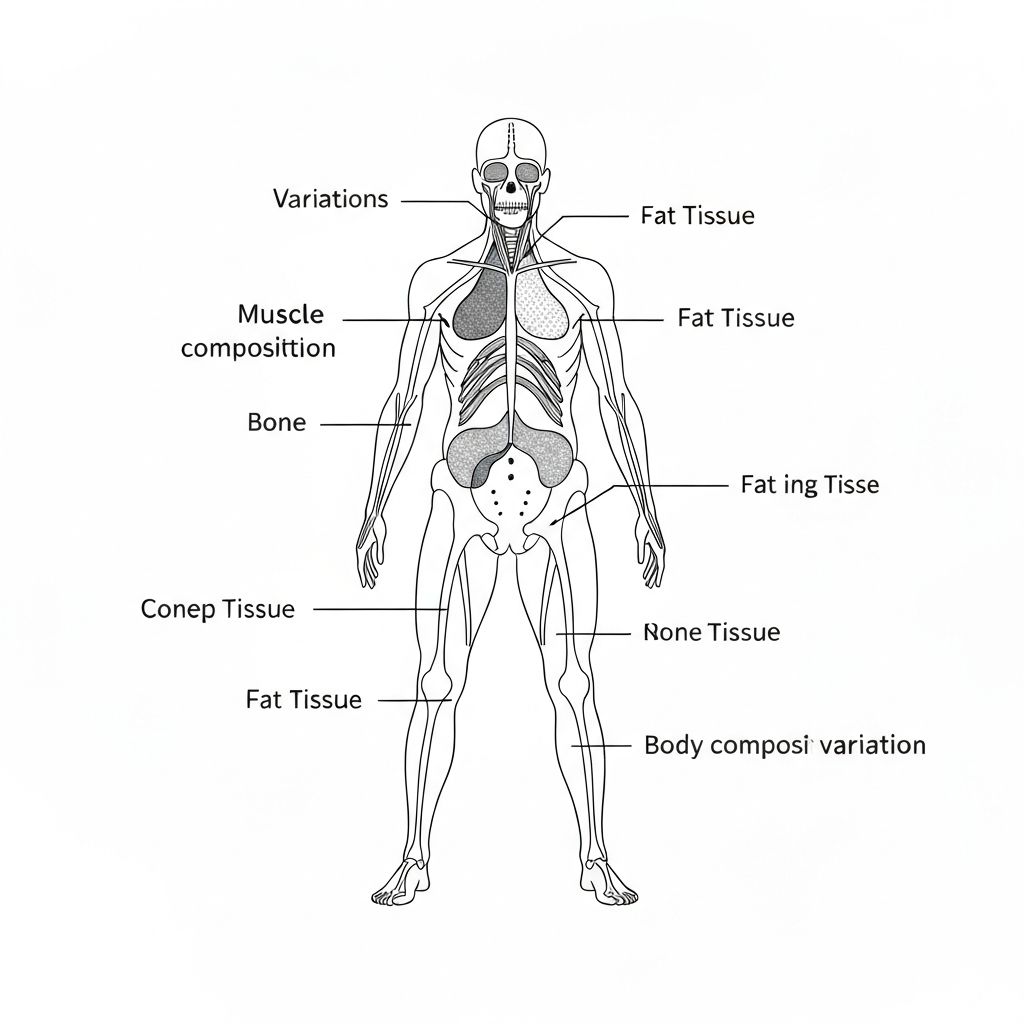
Body composition—the proportion of muscle, fat, bone, and water in the human body—varies dramatically across individuals. Understanding what creates this variation is essential to comprehending nutritional science and the physiological basis of human diversity.
Genetic Predisposition
Genetics establish the foundation for an individual's body composition potential. Genetic variation influences multiple aspects of composition: baseline metabolic rate, tissue distribution patterns, muscle fiber type composition, hormone receptor sensitivity, and how efficiently different tissues respond to nutrients.
Twin studies demonstrate that genetics account for approximately 40-70% of body composition variation, depending on the population and specific trait measured. However, genetics determines predisposition, not destiny. Environmental factors determine whether genetic potential is expressed.
Nutritional Intake
Nutrition directly influences tissue composition through multiple mechanisms. Macronutrient availability provides the raw materials for tissue synthesis. Protein supplies amino acids for muscle maintenance. Overall energy balance determines whether tissues are maintained, expanded, or reduced. Micronutrient status supports metabolic processes that determine how efficiently tissues are maintained.
The timing, quality, and quantity of nutrition all influence composition. Populations with consistent access to diverse, nutrient-dense foods show different average composition than populations with limited dietary variety.
Physical Activity Patterns
Activity profoundly influences body composition independent of nutrition. Resistance activity stimulates muscle tissue growth and maintenance. Cardiovascular activity influences metabolic function and energy partitioning. Sedentary activity patterns associated with modern occupations show different average composition than populations with occupational activity.
Interestingly, activity effects on composition are not automatic—they require interaction with adequate nutrition. Activity without nutritional support to enable tissue adaptation produces different results than activity with adequate nutrition.
Age and Life Stage
Composition changes throughout the lifespan in predictable patterns. During childhood and adolescence, rapid tissue growth occurs under hormonal guidance. In early adulthood, composition typically stabilizes. Middle age and later life commonly feature gradual muscle loss and adipose tissue redistribution, patterns influenced by hormone changes, activity levels, and nutritional adequacy.
However, these are average patterns with substantial individual variation. Some individuals maintain relatively stable composition across decades while others show significant changes. Nutritional adequacy and continued physical activity can substantially modify typical age-related composition changes.
Hormonal Environment
Hormonal balance profoundly influences composition through effects on metabolism, tissue growth, and energy partitioning. Testosterone, estrogen, thyroid hormones, cortisol, and insulin all directly influence how tissues are maintained and where energy is stored. Sex hormone differences create typical differences in composition between sexes, though individual variation within each sex exceeds average differences between sexes.
Hormonal changes with age, reproductive status, and stress levels all influence composition. Hormonal disorders can substantially alter typical composition patterns independent of nutrition or activity.
Environmental and Lifestyle Factors
Beyond direct nutrition and activity, numerous environmental factors influence composition. Sleep quality and duration affect metabolic hormones and recovery processes. Chronic stress elevates cortisol, which can influence adipose distribution. Temperature regulation requires metabolic adaptation in different climates. Occupational patterns determine typical activity levels.
Socioeconomic factors influence composition by affecting food access, occupational activity patterns, stress levels, and healthcare access. These population-level influences create systematic differences in average composition across demographic groups, patterns that reflect environmental and social factors rather than inherent differences.
Ethnic and Population Differences
Different populations show characteristic average composition patterns reflecting genetic adaptation to ancestral environments and dietary traditions. Populations with genetic ancestry from high-latitude regions where caloric scarcity was common may show metabolic efficiency favoring adipose storage. Populations with agricultural traditions emphasizing particular crops developed genetic adaptations to efficiently utilize those nutrients.
However, these are statistical averages with tremendous individual variation. Modern populations also show significant composition changes across generations due to environmental changes—dietary modernization, occupational changes, and activity pattern shifts all influence composition independent of ethnic background.
Interactions Between Factors
Body composition is not determined by any single factor. Rather, genetics, nutrition, activity, age, hormones, and environment interact to create individual composition patterns. The same nutritional intake produces different results in individuals with different genetic predispositions. The same activity level produces different results in individuals with different nutritional support.
Understanding composition variation requires recognizing these complex interactions. An individual's composition represents the cumulative result of their entire history of genetic potential, nutritional intake, activity patterns, hormonal environment, and life circumstances.
Population Variation is Normal
The diversity in body composition across human populations is not pathological—it reflects normal biological variation created by the complex interplay of all these factors. Shape diversity is expected, healthy, and reflects the adaptation of different populations to different circumstances. This variation is a feature of human biology, not a defect.
Explore More
Read our other articles to discover more about nutritional science and body composition.
Return to Blog